Why Babies Love Repetition (And Why That’s a Good Thing)
A calm explanation of why babies ask for the same books again and again — and how repetition supports early learning.
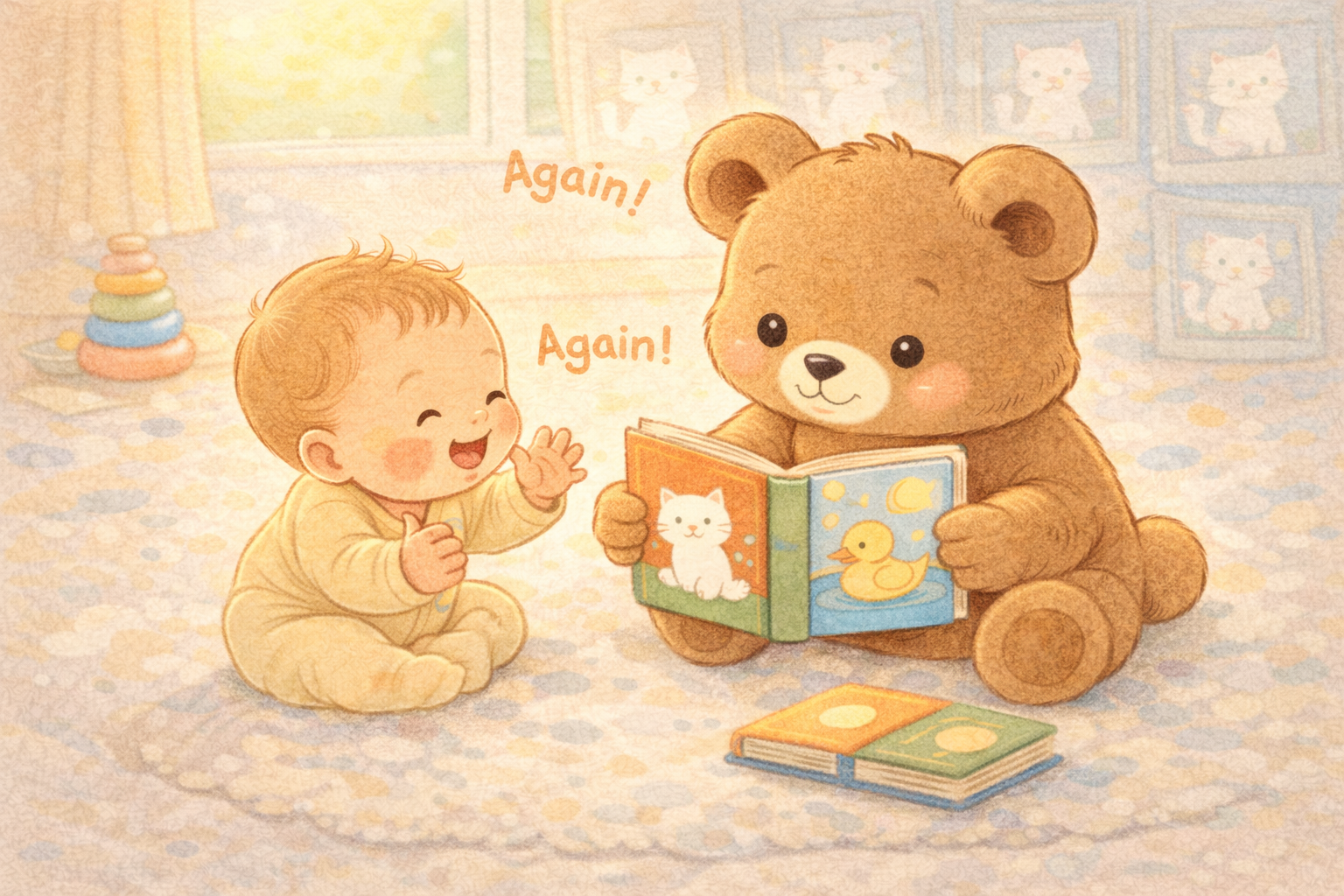
If your baby wants the same book over and over, you’re not doing anything wrong.
In fact, repetition is one of the clearest signs that a book is working.
While adults often crave novelty, babies learn through familiarity. Repeating the same words, images, and rhythms helps them make sense of the world — one predictable moment at a time.
What Repetition Means for Babies
For babies, repetition isn’t boring. It’s reassuring.
When a baby hears the same phrase or sees the same picture again, they begin to:
- Anticipate what comes next
- Recognize patterns
- Feel more confident engaging
- Focus on small details they missed before
What looks like “the same thing again” to us is often a deeper experience for them.
Familiarity Helps Babies Feel Safe
Babies are constantly processing new sensations — sounds, movements, faces, emotions. Familiar books offer a small pocket of predictability in all that change.
This is why repeated books often become:
- Bedtime favorites
- Comfort objects
- The ones babies bring to you on their own
The goal isn’t to entertain. It’s to create a sense of safety and connection.
Repetition Supports Early Language
Even before babies can speak, they’re learning how language works.
Hearing the same words and rhythms helps babies:
- Recognize sounds
- Notice pauses and emphasis
- Begin predicting language patterns
Over time, this familiarity makes it easier for them to engage — through sounds, gestures, or pointing.
Why Babies Focus on the Same Page
Many parents notice their baby reacting strongly to one specific page.
That’s normal.
Babies often:
- Fixate on a favorite image
- Anticipate a repeated phrase
- Smile or move before a page is turned
This isn’t random. It’s a sign that the baby recognizes what’s coming and is actively participating.
Does Repetition Mean Fewer Books Are Better?
Often, yes.
A small number of well-chosen books read repeatedly tends to be more meaningful than a large collection read once.
Variety will come later. Right now, familiarity does the heavy lifting.
When Does Repetition Stop?
It doesn’t — it just changes.
As babies grow, repetition shifts from:
- Hearing → predicting
- Watching → pointing
- Listening → trying to say the words
The same book can support different kinds of learning over time.
Common Questions
Should I stop rereading the same book?
No. If your baby is engaged, repetition is doing its job.
Is repetition still useful for older babies?
Yes. Familiar books often support new skills as babies grow.
What if my baby only wants one book?
That’s okay. You can follow their lead and introduce variety gradually.
It doesn’t need to be perfect. It just needs to be shared.
For more context on choosing books across ages, you can also read:
The Best Books to Read to Babies (0–18 Months)
A simple place to start
If you’d rather not overthink it, you can see our reading kit here.