The Best Books to Read to Babies (0–18 Months)
A calm guide to choosing books for babies — what matters, what doesn’t, and how to start without overthinking.
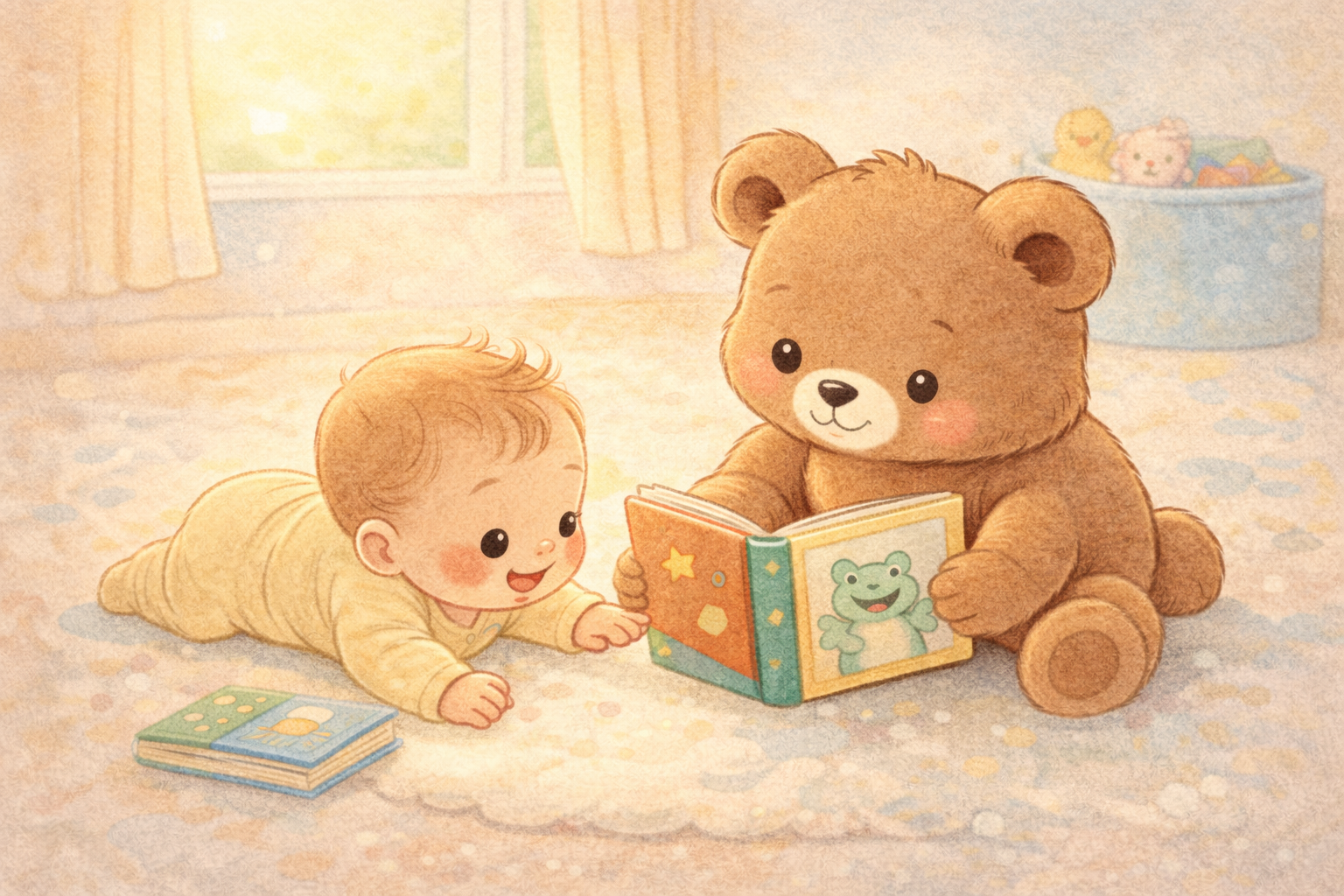
If you’ve ever stared at a wall of baby books and felt unsure, you’re not alone. Most parents don’t need more options — they need fewer, better ones.
At 0–18 months, babies aren’t following storylines. They’re learning through rhythm, repetition, faces, and the feeling of being close to you. So “best” doesn’t mean the most popular or most educational. It means the books your baby will actually return to — and the ones you’ll still feel good reading for the 30th time.
How Babies Experience Books
Babies experience books as:
- Sound (your voice, rhythm, repeated phrases)
- Pattern (predictability, familiar pages)
- Interaction (pointing, pausing, lifting, naming)
- Connection (closeness, comfort, shared attention)
If your baby is chewing the corner, grabbing pages, or losing interest halfway through — that’s normal. It still counts.
What Makes a Good Book for Babies
Simple, repeatable language
Short lines and repeated phrases help babies recognize patterns. This is why the “same book again” phase is often a good sign.
Clear, uncluttered pictures
Babies do best with images that are easy to pick out. Busy pages can be fun, but simple visuals make pointing and naming easier.
Built-in interaction
Books that naturally invite you to pause, point, or surprise your baby tend to get read more often.
Warmth and reassurance
At this age, the emotional tone matters. Books that feel gentle and comforting often become part of bedtime and tough moments.
Durability
If it can survive chewing, it’s doing its job.
The Kinds of Books Babies Love
Instead of chasing a long list, it helps to think in categories. A small set that covers these tends to work best:
Rhythm and repetition
Books with predictable language and structure that babies come to recognize with their bodies before their words.
Interactive surprises
Peekaboo moments, flaps, or simple reveals that create back-and-forth and anticipation.
Everyday stories
Simple sequences that mirror routines — day to night, hungry to full, inside to outside.
Comfort and connection
The books you reach for when it’s time to slow down and come closer.
Faces and feelings
Books that feature expressions help babies begin noticing emotions without turning it into a lesson.
How Many Books Do You Actually Need?
Less than you think.
For most families, 3–5 well-chosen board books is enough to start. Familiarity beats variety at this age. Babies often engage more deeply when they recognize what’s coming next.
If your baby “only” wants the same two books for a week, that’s normal — and often a sign the books are doing their job.
Reading Tips by Age
0–6 months
Keep it short. One page is fine. Hold the book close so your baby can see it, and don’t worry about finishing.
6–12 months
Let your baby grab, tap, and turn pages. Pause often. Point to one picture at a time and name it slowly.
If you’re looking for what works specifically around this stage, see:
Books for 6-Month-Old Babies: What Actually Works
12–18 months
Follow your baby’s attention. If they want the same page again, do it. Ask simple questions (“Where’s the…?”) and celebrate pointing.
Common Questions
When should I start reading to my baby?
Anytime. Babies benefit from the sound of your voice and the shared calm, long before they understand words.
What if my baby loses interest quickly?
That’s expected. Reading at this age is more like exposure than a “session.” Stopping early is completely fine.
Is it bad to read the same book over and over?
Not at all. Repetition helps babies recognize patterns and feel secure.
What if my baby only wants to chew the book?
That’s normal too. Board books are designed for it, and chewing is part of early exploration.
It doesn’t need to be perfect. It just needs to be shared.
A simple place to start
If you’d rather not overthink it, you can see our reading kit here.