What Makes a Good Baby Book (And What Matters Less)
A thoughtful look at what actually makes a baby book work — and why simplicity, repetition, and warmth matter most.
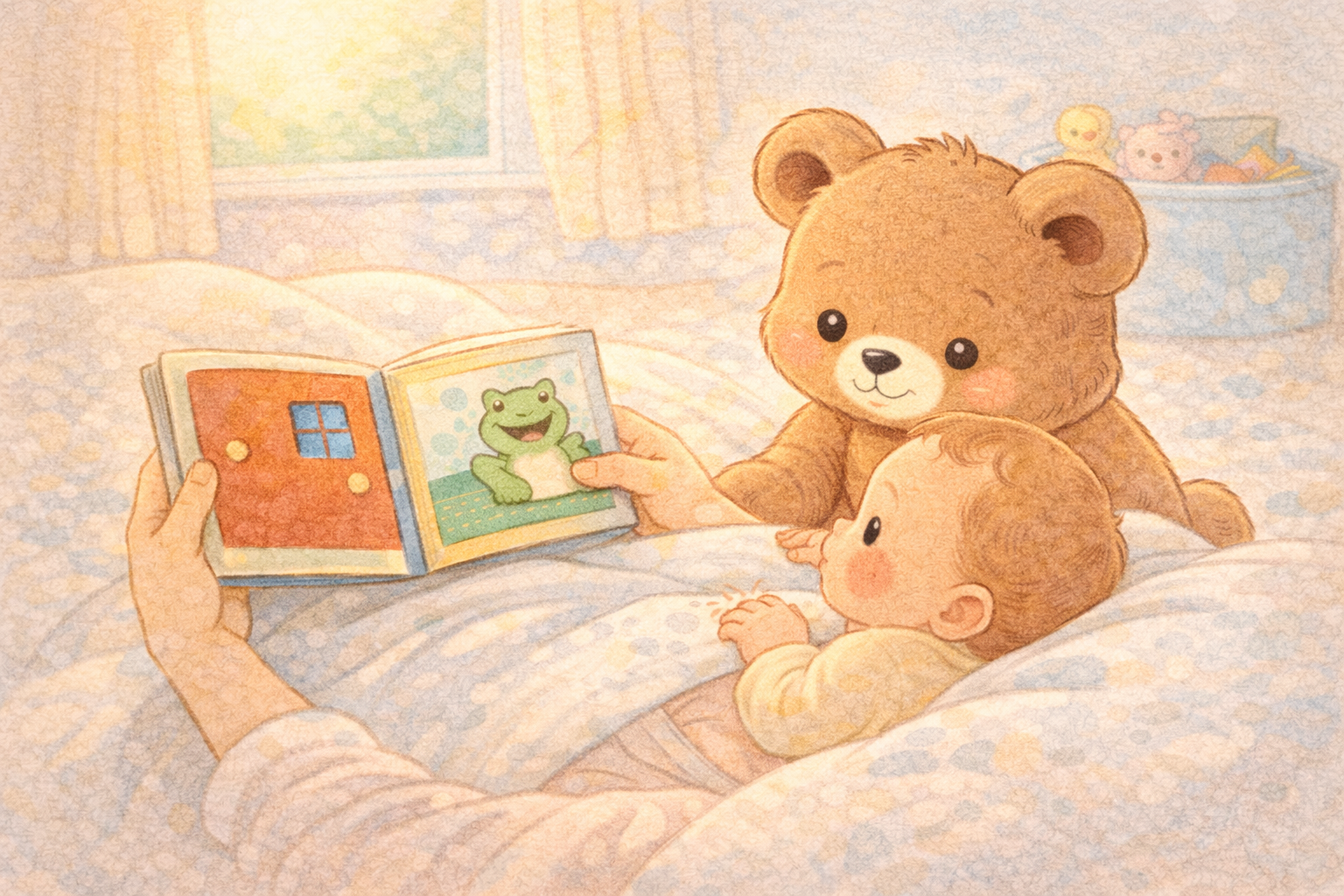
When you’re choosing books for a baby, it’s easy to assume that more features mean more value.
Bright colors. Longer stories. Educational claims. Awards on the cover.
But babies don’t experience books the way adults do. What makes a book work for a baby is often quieter — and simpler — than it looks.
What Babies Respond to First
Before babies understand stories, they respond to:
- Rhythm and sound
- Familiar faces and shapes
- Repetition
- Emotional tone
A good baby book supports these experiences without asking a baby to do too much at once.
The Qualities That Matter Most
Simple, repeatable language
Books with short phrases and repeated lines give babies something to recognize. Familiar language helps them anticipate what’s coming next, even before they understand the words.
This is one reason many babies return to the same books again and again.
Clear, focused images
One main subject per page is often enough. Images that are easy to pick out make pointing, naming, and shared attention easier.
Overly busy illustrations can be stimulating, but they aren’t necessary for engagement.
Built-in pauses
Good baby books create natural moments to slow down — a repeated phrase, a predictable turn, a gentle surprise.
These pauses invite interaction without forcing it.
Emotional warmth
Babies respond to tone. Books that feel gentle and reassuring often become favorites during quieter moments, like bedtime or transitions.
Warmth matters more than cleverness.
Durability
A good baby book can be explored without rules.
Chewing, bending, tapping, and page-turning are all part of how babies learn. Sturdy books make it easier to read without worrying about damage.
What Matters Less Than You Think
Some features matter less than many parents expect:
- Long storylines
- Complex messages
- Large collections
- Perfect age labels
Babies don’t need variety to benefit from reading. They need familiarity and repetition.
How Taste Develops Over Time
As babies grow, their engagement changes.
A book that starts as something to chew may later become:
- A favorite to point at
- A source of anticipation
- A story they recognize
Good baby books grow with the child — not because they’re complex, but because they’re familiar.
Common Questions
Do educational labels matter?
Not much at this age. How a baby engages with a book matters more than what it claims to teach.
Is it okay if a book feels “too simple”?
Yes. Simplicity is often what makes a book usable and comforting.
Should I avoid books that are messy or worn?
No. Signs of use usually mean a book is being enjoyed.
It doesn’t need to be perfect. It just needs to be shared.
For more on why familiarity matters, you can also read:
Why Babies Love Repetition
A simple place to start
If you’d rather not overthink it, you can see our reading kit here.